
This 5-Minute Leg Stretch Could Be Your Key to Relief.
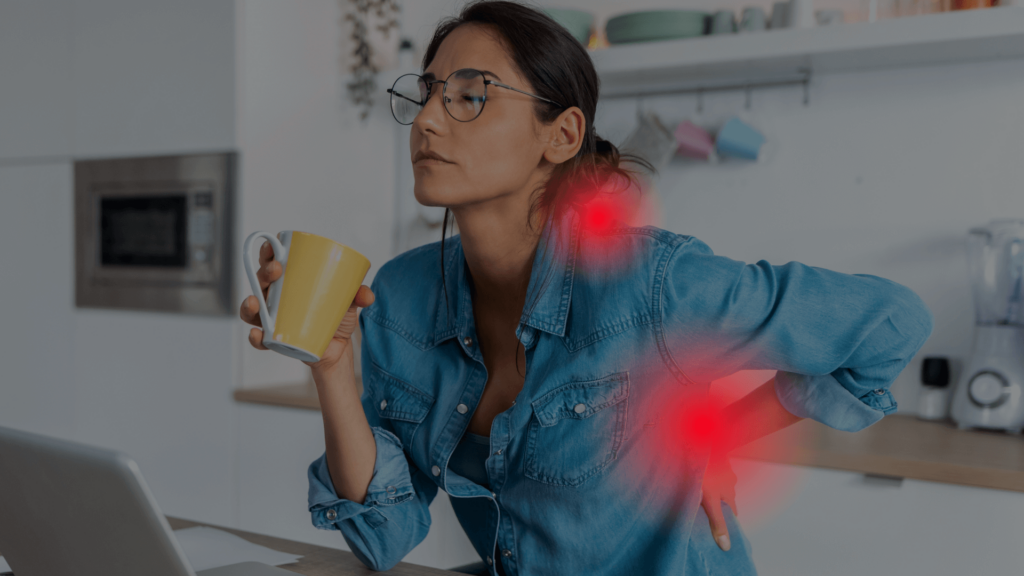
- Why Back Pain Happens: Learn how tight thigh muscles and poor posture could be the hidden cause of your back pain.
- The Simple Stretch: Discover a 5-minute stretch to ease tension and realign your lower back.
- Beyond Stretching, Explore other critical fixes—like posture adjustments and daily habit changes—to address extension-related back pain for the long term.
Back Pain Relief Can Feel Impossible
Rick Olderman, MSPT, believes understanding the body’s interconnected systems is key to solving chronic back pain. In this article, we’ll focus on one overlooked but highly effective solution: a simple thigh stretch for people suffering from an Extension Problem—a typical pain pattern often responsible for chronic lower back discomfort.
What is an Overarching low back pain problem?
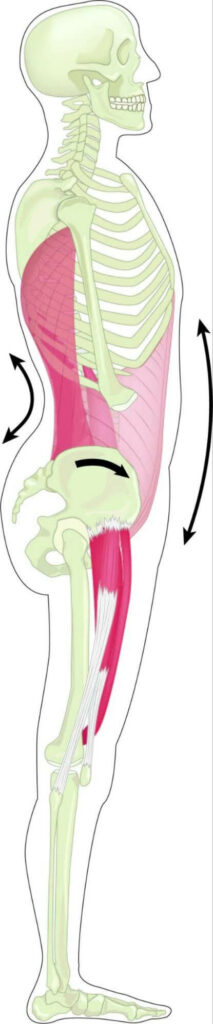
Common symptoms of an Extension Problem include:
An Extension Problem occurs when the lower back arches excessively, straining the lumbar spine’s muscles, joints, and nerves. While a natural inward curve (lordosis) is normal, too much arching creates tension that can worsen back pain.
- Pain that gets worse when standing for long periods.
- Discomfort while standing improves when sitting or bending forward.
Key Takeaway: “Excessive arching pain pattern in the lower back, known as an Extension Problem, is a common yet overlooked cause of chronic back pain.”
Why Do Extension Problems/Overarching Lower Back Pain Patterns Happen?
- Tight muscles: Particularly in the hips, thighs (quadriceps), and lower back
- Poor posture: A rigid "military erect" stance overarches the back.
- Walking mechanics: Incorrect gait patterns that deactivate key lumbar-supporting muscles.
- Ergonomic issues: Work setups, like poorly designed chairs or desks, that encourage arching.
- Emotional stress: Anxiety or trauma that manifests as muscular tension, particularly in the back and thighs.
Why Are Tight Quadriceps a Problem?
The quadriceps are a group of muscles on the front of the thigh that attach to the pelvis. When these muscles are tight, they pull the pelvis forward into a tilt,
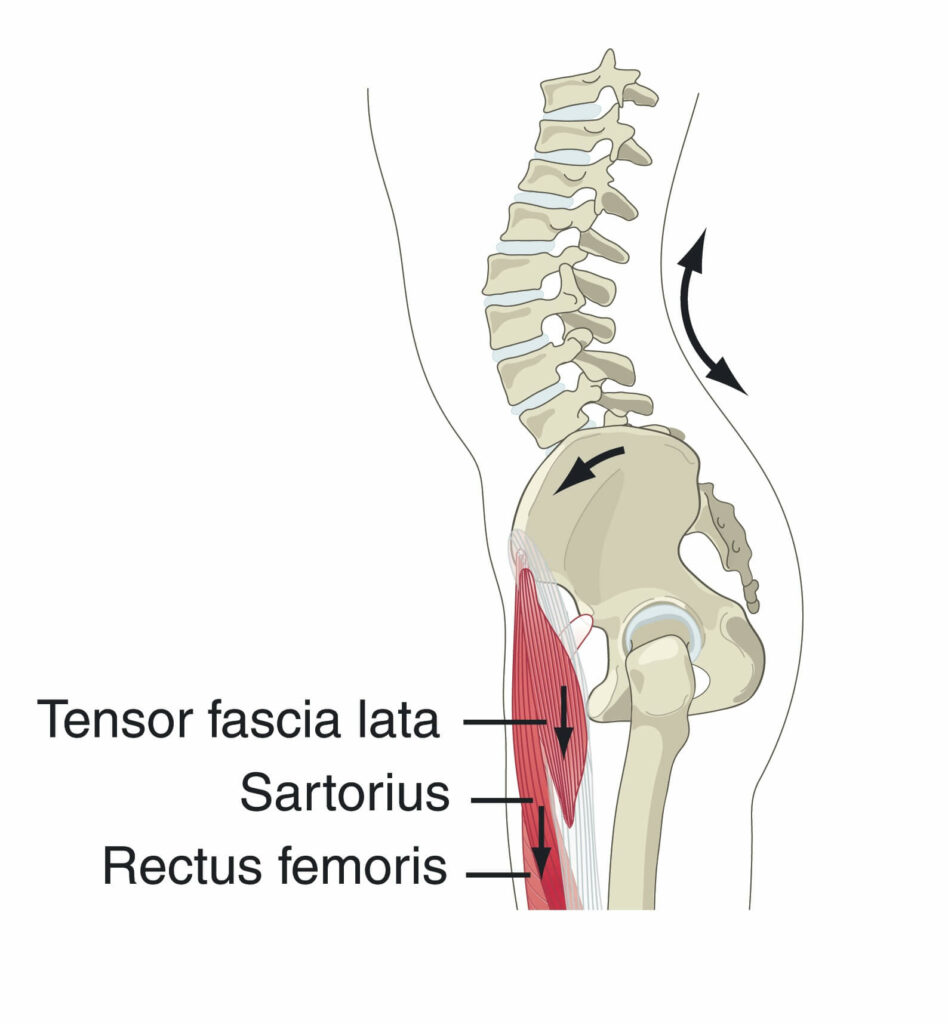
Key Takeaway: Tight thigh muscles can tilt the pelvis forward, increasing lower back arching and worsening pain
- 1. Set up: Find a firm, stable surface like a massage table, sturdy dining table, or weight bench. A bed can also work in a pinch.
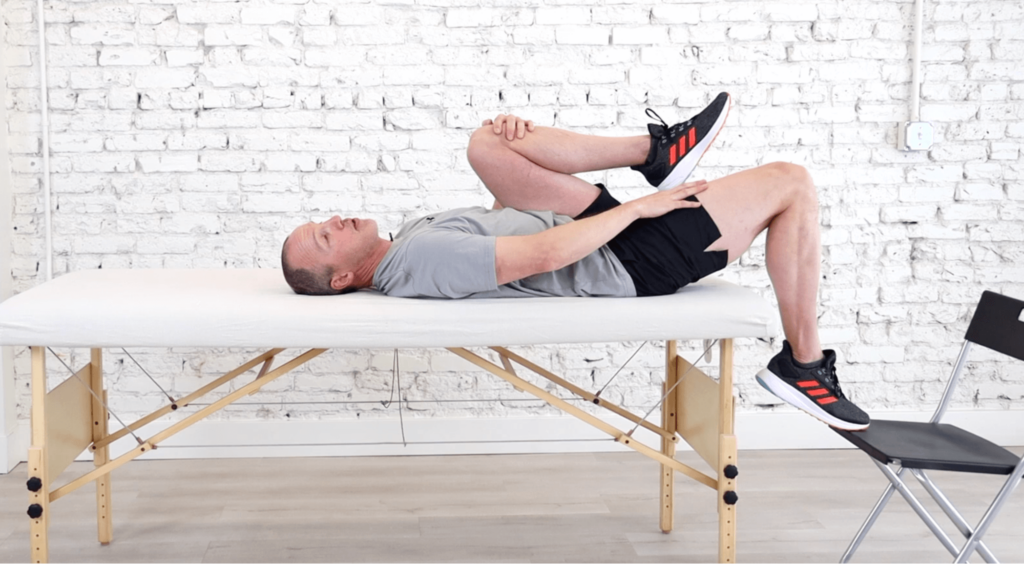
- 2. Position yourself: Lie on your back and pull both knees to your chest.
- 3. Stretch one leg: Hold one knee against your chest with both hands. Slowly lower the other leg, bending its knee to a 90-degree angle so it drapes over the edge of the surface. Let gravity gently stretch your thigh. Hold for 30–60 seconds.
- 4. Reset: To reset your back, bring the stretched leg back to your chest and hold both knees for a few seconds.
- 5. Switch sides: Repeat on the other leg, noting any differences in flexibility or tension.
- 6. Repeat: Perform the stretch 2–3 times per side. If your thighs feel incredibly tight, repeat 3–5 times daily.
Pro Tips For Successful Low Back Pain Relief:
- If your legs feel heavy, rest your toes on a chair for support, then lower your heel to increase the stretch.
- Avoid forcing your leg down; let gravity and time do the work.
- After stretching, stand up and notice any changes in your back pain. Many people experience immediate relief!
Key Takeaway: Stretching your quadriceps can reduce lower back pain by correcting pelvic alignment and easing spinal tension.
Beyond Stretching: A Comprehensive Approach
- Posture adjustments: Develop healthy posture habits that don’t exacerbate pain.
- Strengthening weak muscles, Particularly those that stabilize the pelvis and lower back.
- Ergonomic fixes: Optimizing your workspace to minimize strain on your back.
- Daily habit changes: Learning better movement strategies for everyday tasks.
- Walking improvements: Correcting your gait to activate key muscles.
Key Takeaway: A holistic approach, combining stretching with posture and habit changes, can provide lasting relief for Extension Problems.
Here’s how you can get more help
- Read the Book Pain Patterns: Why You Are in Pain and How to Stop It, which provides a systems-thinking approach to pain relief. It is available on Amazon.
- Join Rick’s Programs: Sign up for my masterclass to explore step-by-step home exercises tailored to pain patterns. Use discount code “RickBlog20” to receive 20% off your order!
- Watch My YouTube Videos: I’ve made hundreds of free videos to help people solve their pain.
Final Thoughts from Rick
Related Articles:
FAQs About Back Pain Solutions
When Should I Worry About Lower Back Pain?
- Numbness, tingling, or weakness in one or both legs.
- Loss of bladder or bowel control.
- Severe pain that disrupts sleep or daily activities.
- Pain that does not improve or worsen despite trying stretches or other remedies.
What to Do When You Can Barely Walk from Lower Back Pain?
- Stop and Rest: Avoid activities that worsen your pain and find a neutral, comfortable position.
- Try Gentle Movements: Lie on your back with your knees bent and feet flat to ease pressure on your spine.
- Consider the Underlying Cause: If your pain is due to an overarching pattern, try the recommended quadriceps stretch to reduce strain.
- Seek Immediate Help: If the pain is severe, accompanied by numbness or weakness, or prevents you from functioning, consult a healthcare provider immediately.
How to Fix Overarching Back?
- If You Have an Extension Problem (Overarching Back Pain): Sitting or lying with knees bent is generally more comfortable because it reduces the arch in your lower back.
- General Advice: Alternate between sitting, lying, and gentle movement to prevent stiffness and promote circulation. Find a position that feels best for your specific condition, such as lying on your back with a small pillow under your knees for support.


