Back & sciatica · test
The 10-second photo test that explains why your sciatica keeps coming back
A physical therapist’s 30-year look at the movement patterns behind recurring sciatic pain, and simple tests you can try yourself.
Licensed orthopedic physical therapist, 30 years of clinical experience. Former clinic owner,
author of Pain Patterns, winner of the 2025 NIEA Award, and creator of a systems-based
approach to chronic pain used in his APTA-approved continuing education course.
If your sciatica keeps coming back, you’ve probably tried physical therapy, chiropractic care, injections, massage, medication, even surgery. You may have been told the cause is a herniated disc, spinal stenosis, or piriformis syndrome. But as you’ve found, those diagnoses don’t always explain why the pain keeps returning.
After 30 years as an orthopedic physical therapist, here’s what I’ve found: persistent one-sided sciatica usually has a specific pattern in the body, and that pattern is almost always caused by an older problem in the lower body. Fix the first without finding the second, and the pain comes back.
Sciatica can have serious causes that need medical evaluation. The information in this article isn’t a diagnosis or a substitute for professional care.
Watch the video version
Try these two simple tests first. They’ll tell you whether an uneven pelvis and rib cage is part of your sciatica.
Why does my sciatica keep coming back?
For many people, one-sided sciatic pain is caused by an uneven pelvis and rib cage on the same side as the pain — what I call a sidebending problem. It narrows the space where the nerve roots exit the spine. Leveling the pelvis and rib cage out can relieve pain within minutes, and I’ll show you exactly how to do that.

But that’s only half the answer. It will likely return, because something is pulling your body into that uneven position:
- A walking pattern that turns off your glutes, often rooted in an old injury your body quietly compensated around
- Your thigh bone’s natural shape, which may put your glute at a disadvantage
- Tight thigh muscles pulling your pelvis out of position
Fix the unevenness without fixing what’s driving it, and both the sciatic pain and the sidebending problem come back. None of this replaces a medical workup — it’s the piece most workups miss, and I’ll explain why at the end.
Cause 1: the sidebending problem
Quick take: An uneven pelvis and rib cage narrows your nerve root space. It’s easy to test, but it’s a symptom of a bigger problem — covered in causes 2 to 4.
If you’ve been using your body unevenly for a while, your body will form a larger waist crease on the side where the pelvis is higher and the rib cage is lower — a sign that side is basically collapsing.
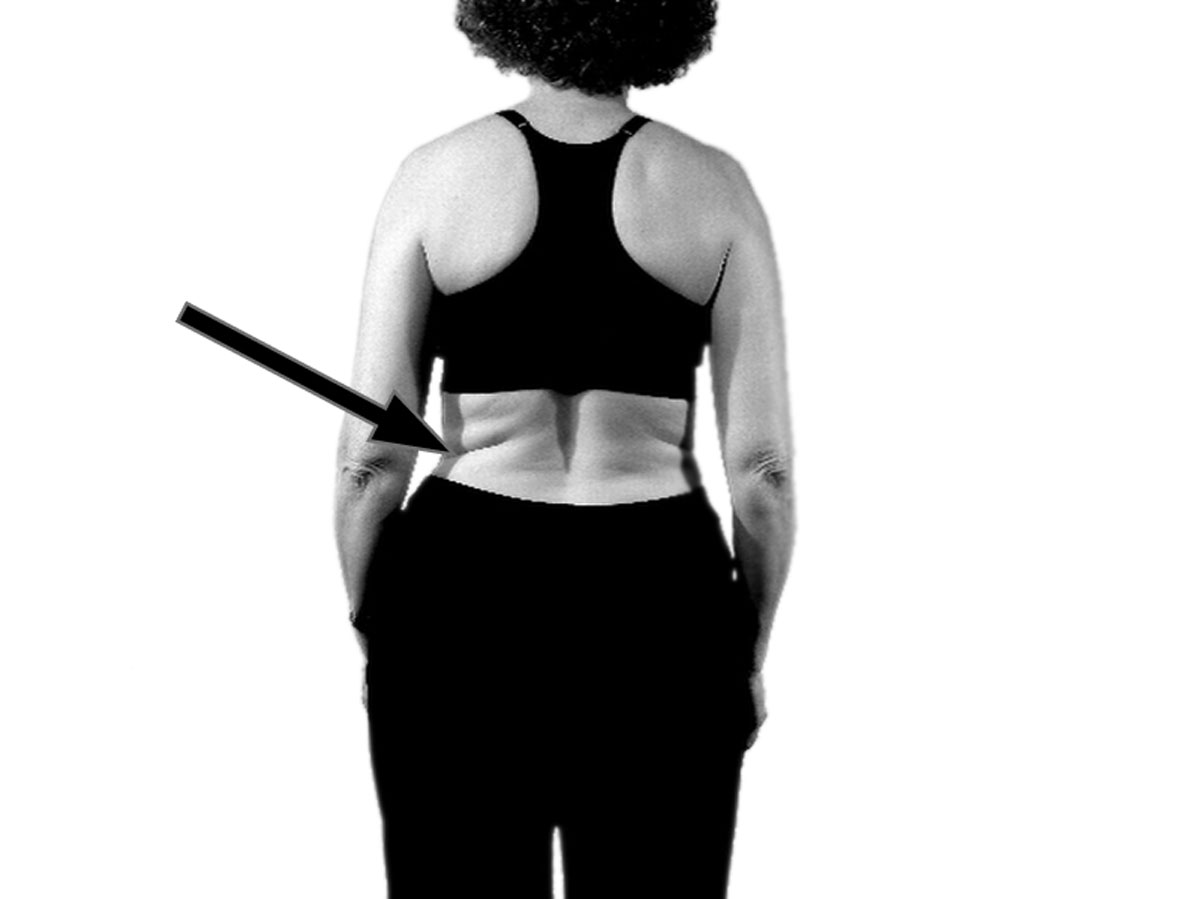
Why this causes pain. That lateral bend closes the space where the nerve roots exit, on that side. You can also imagine what it must be doing to your disc and vertebral facet joints. Level the pelvis and rib cage, and that space reopens, relieving pressure and pain almost instantly.
Try this test
The 10-second photo test
- Stand relaxed and lift up your shirt.
- Have someone photograph your back.
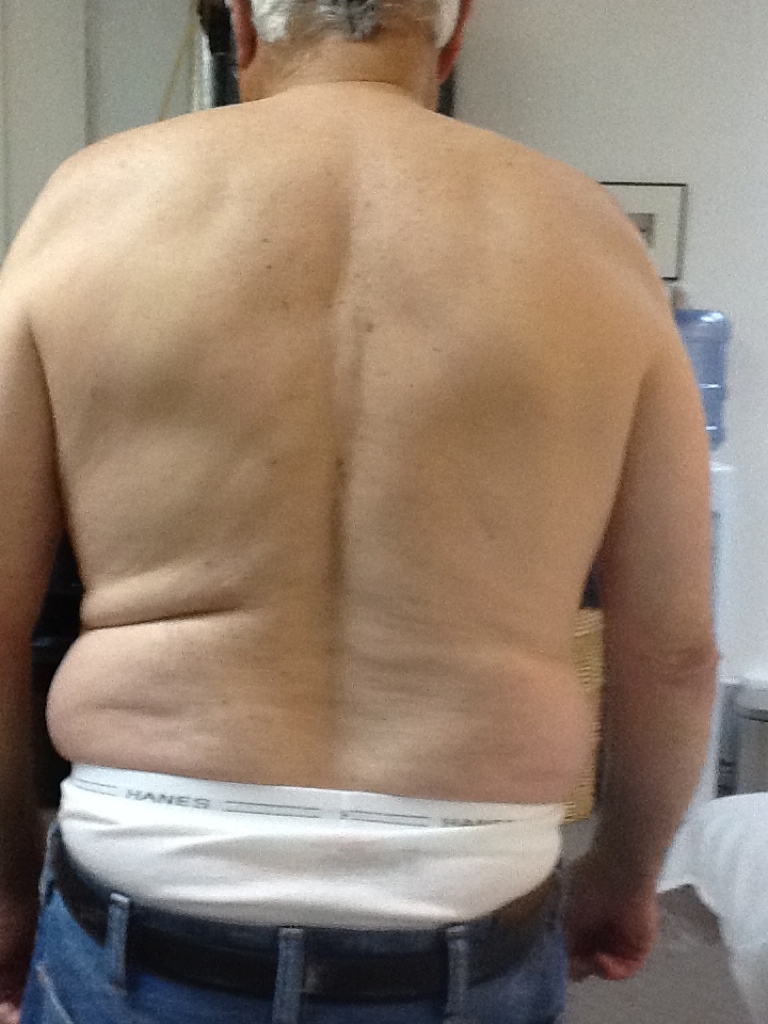
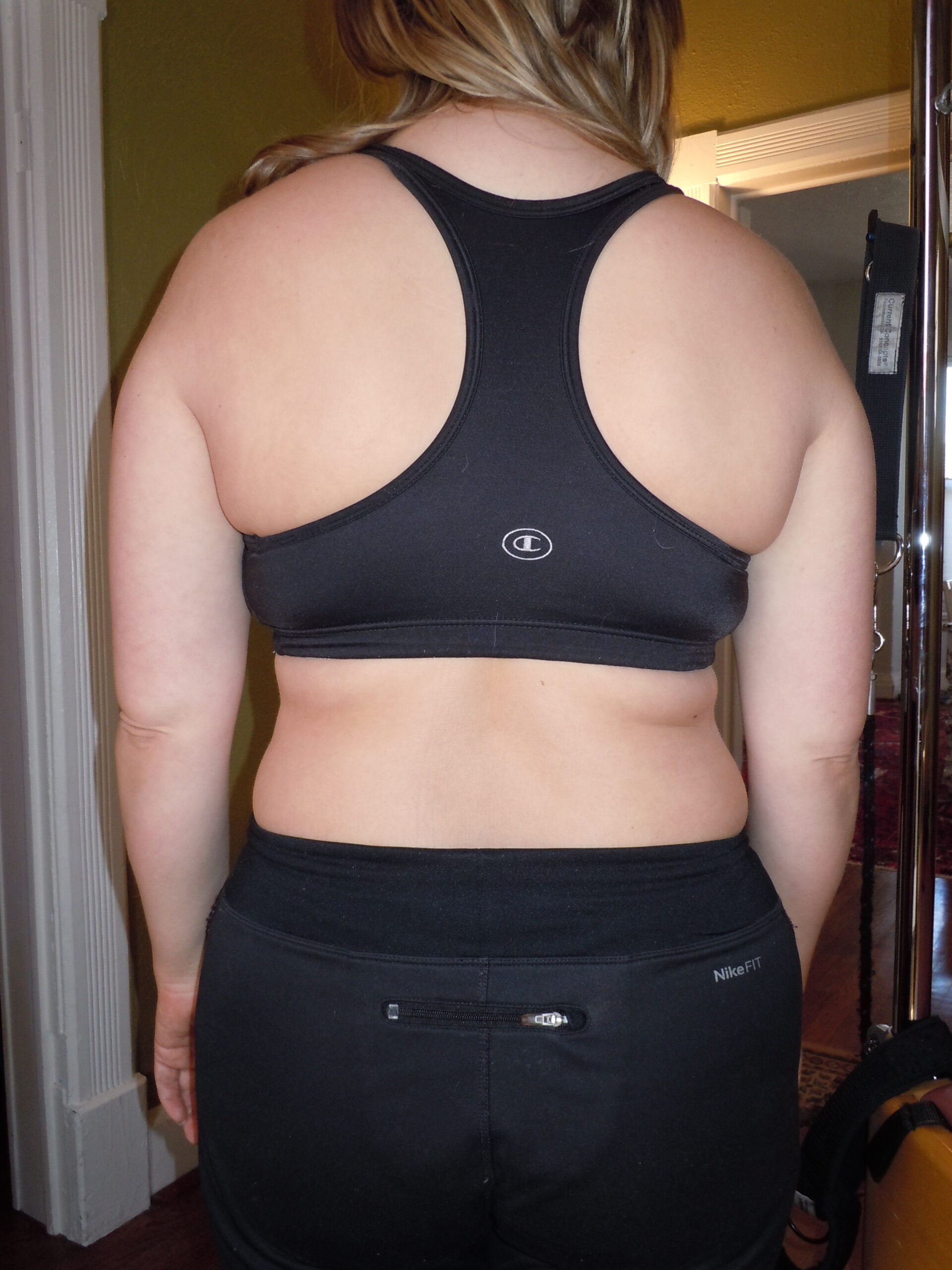
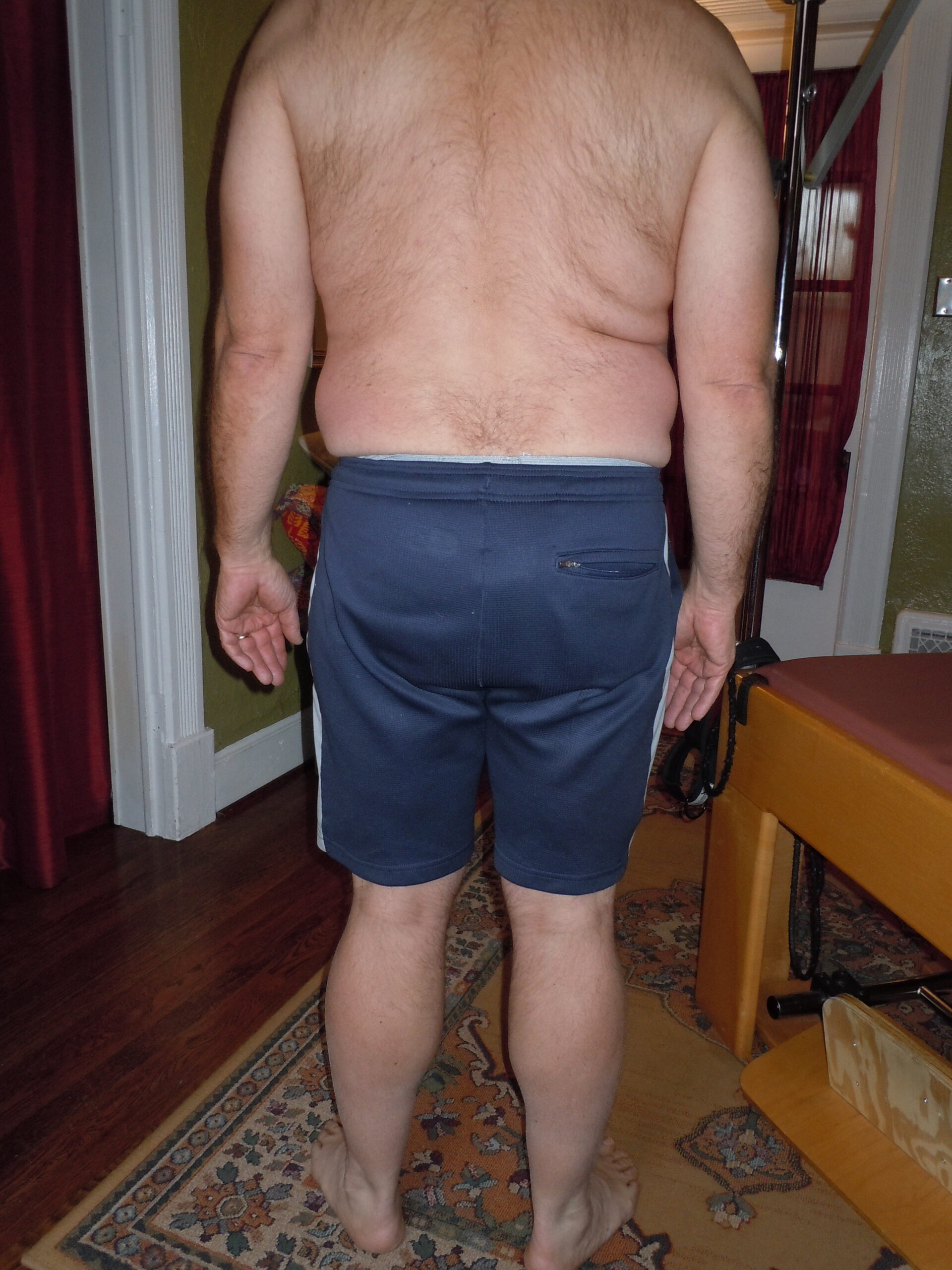
- Look for a crease at the waist on one side.
If you’ve taken a picture of your back, it’s very likely your pain is on the same side as your sidebending problem — which suggests this pattern is part of the cause.
A temporary quick fix: reaching while walking
Try this
Reaching while walking
- Next time sciatic pain kicks in on a walk, raise the arm straight overhead on your pain side.
- Keep walking with it up in the air for about 10 steps.
- Notice whether the pain drops.
- When you lower your arm, notice how quickly the pain returns.
This lengthens the painful side, removing nerve root compression. Most people feel a real, often immediate drop in pain, because raising that arm lifts the rib cage back up off those nerve roots. It also teaches that same leg how to work better while walking. If it helps, you likely have a sidebending problem, and walking is a driver of it.
The speed at which pain returns tells you something too. Immediately? You have more significant problems with your walking pattern. Stays away a while? Less significant walking issues.
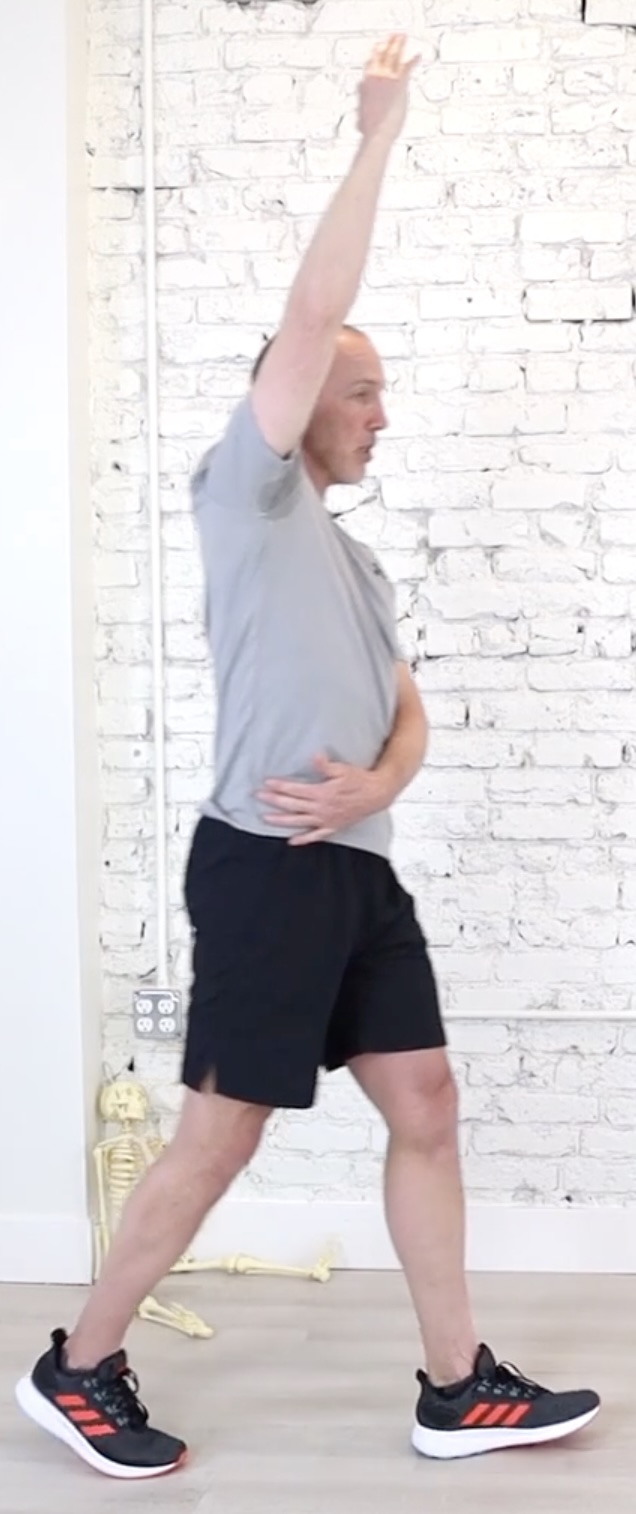
This is a test, not a fix. If pain worsens, or you notice numbness, weakness, or bowel or bladder changes, stop and see a doctor.
Is a sidebending problem due to leg length discrepancy?
If you’ve been told your uneven pelvis is from a leg length discrepancy, that’s one of the most commonly cited — and most frequently misdiagnosed — explanations for this kind of asymmetry. Here’s what’s really going on.
Relief isn’t resolution. Leveling the pelvis and rib cage brings temporary relief because it directly reduces compression. But the sidebending problem doesn’t appear from nowhere. If what’s driving it isn’t addressed, it comes back. The next three sections are about finding those drivers.
Cause 2: the walking habit that’s turning off your glutes
Quick take: A locked-knee walking habit, often rooted in an old injury or shoe wear, turns off your glute and pulls your pelvis and rib cage out of level, one step at a time.
Watch: The walking habit that’s feeding your sciatic pain
You take 5,000 to 10,000 steps a day. Most shoes let people develop a habit their bodies weren’t built for: swinging the foot out front, landing on the heel, locking the knee. That lock turns off the glute on that side. Every step nudges your pelvis and rib cage a little further out of level.
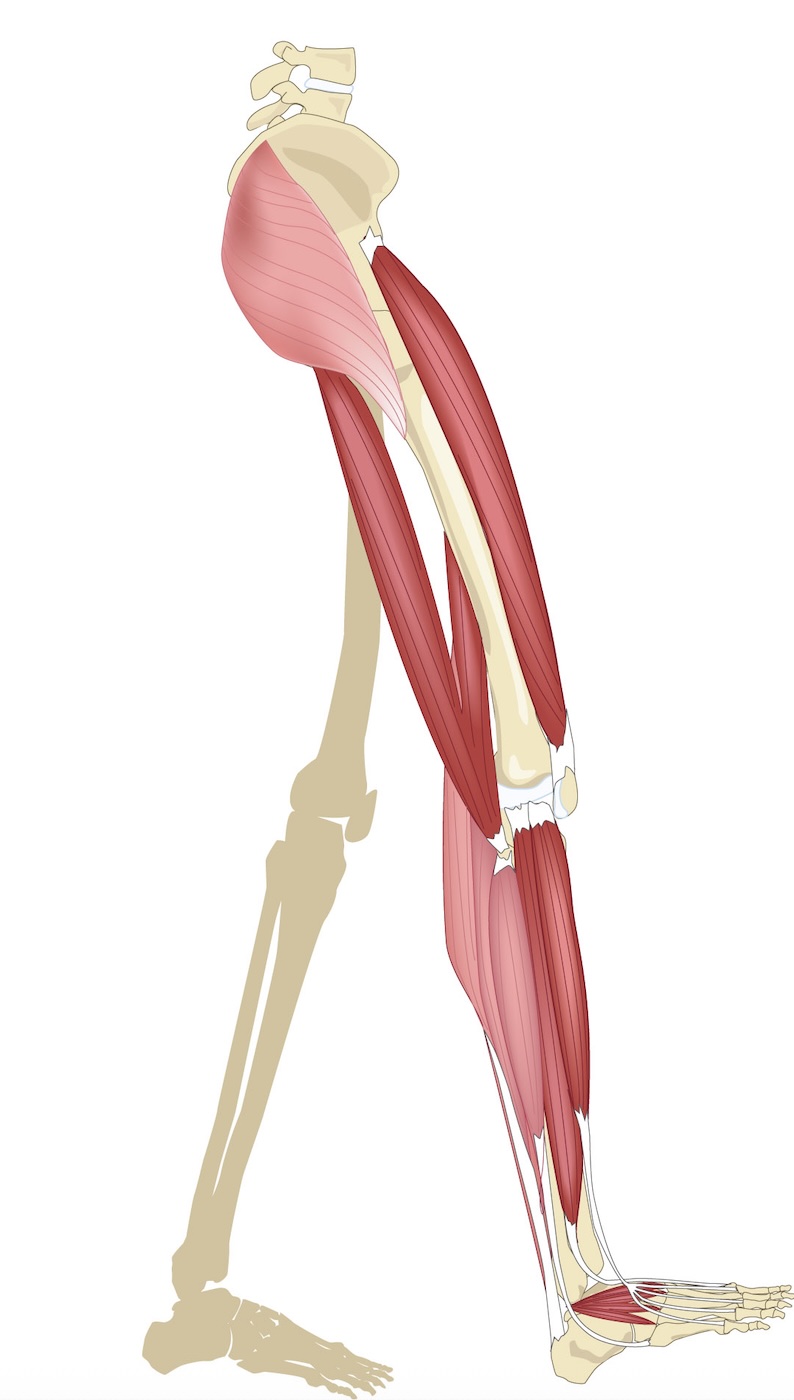
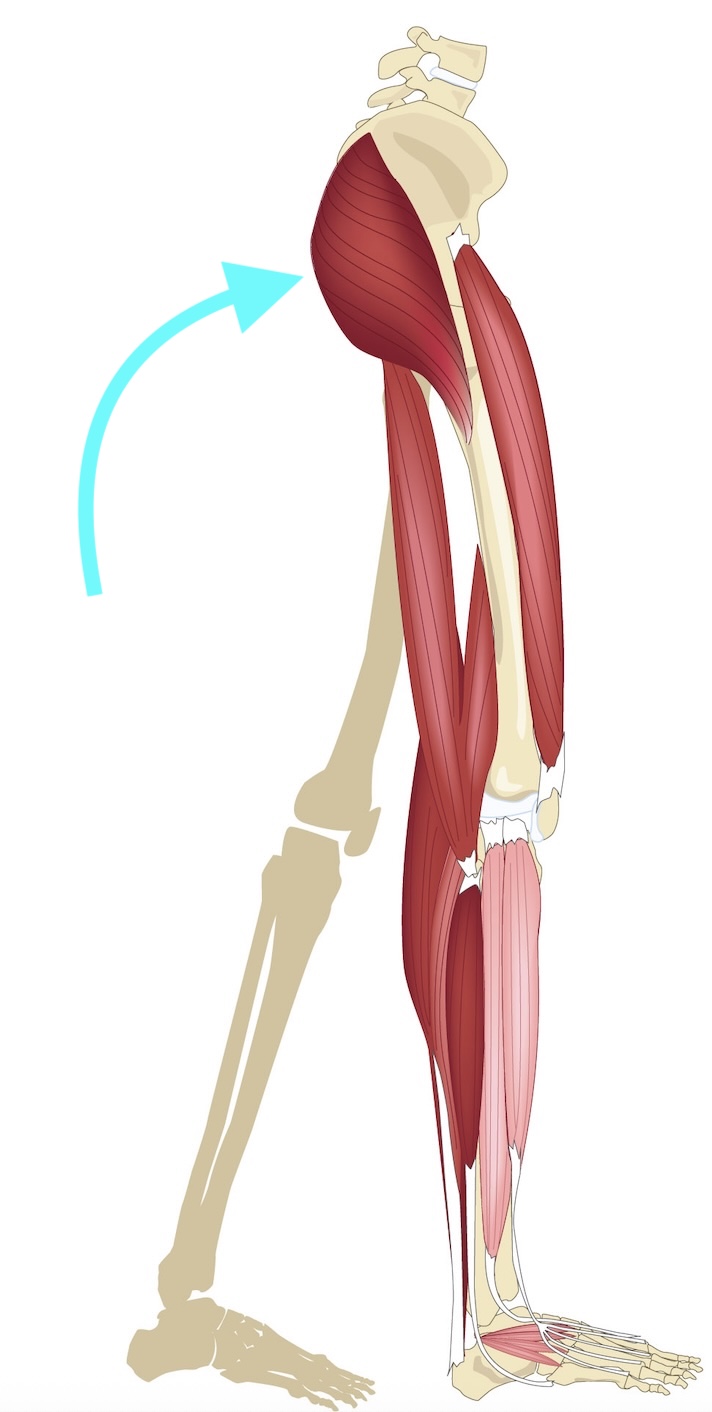
Old injuries your brain has hidden from you
In my clinical experience, aside from shoe wear, poor glute performance often results from an old forgotten injury: a sprained ankle, a banged-up knee, a hip that flared up years ago. That initial pain resolves in part because your brain figured out a way to unload the injury to let it heal. That works in the short term. The long-term consequence is a sidebending problem.
The protective walking pattern never gets undone, because the brain has found a new normal. Without precise guidance on how to restore symmetry, your brain is content to continue, because it’s pain free. Pain is an indicator that something is wrong. Without that indicator, your brain has no reason to change anything.
This is why sciatic pain confuses people: the real driver can be an old injury that hasn’t bothered you in fifteen years, quietly pushing your pelvis and rib cage out of level the entire time, with every step.
If you’re not sure which leg is holding an old injury like this, I cover a test for exactly that — one that reveals which side your brain quietly trusts more — in my knee pain article. It doesn’t test your knee specifically; it tests the compensation pattern underneath a lot of one-sided pain, sciatica included.
The glute mechanism itself — why a quiet glute lets the thigh bone drift and destabilizes the hip during walking — is called anterior femoral glide syndrome. I cover the full mechanism and self-test in my first hip pain article, since it’s the same pattern driving a great deal of hip pain too.
Why a quiet glute causes sciatic pain
With the glute off, the smaller piriformis muscle can take over. The piriformis and glutes have similar jobs, but if we compared them to tools, the glutes would be a backhoe and the piriformis a hand shovel. If you were digging out a new pool over months and your backhoe was broken, your shovel might develop small cracks and eventually break too. It wasn’t meant to dig out a pool. It was meant to dig out a plant.
The piriformis sits directly on the sciatic nerve — there’s also a variant where the nerve runs through it. Chronically overworked, that piriformis tension adds to nerve irritation and the radiating pain down the leg. It’s also why the figure-4 stretch feels good for an hour and then stops working: it soothes the piriformis temporarily, but the next walk puts it right back to work.
You can have sciatic nerve compression at the spine and at the piriformis, for the same reasons. This is why it’s so important to test how the whole lower body system is working. One precise fix can solve several systemic problems.
Cause 3: the shape of your thigh bone
Quick take: Your thigh bone’s natural shape can put your glute at a disadvantage before you even take a step, feeding the same walking-pattern problem from cause 2.
Watch: Why sciatica exercises help some people and make others worse
The same exercises that fix one person’s sciatica can worsen another’s, often due to femur shape. Some people’s thigh bones rotate slightly inward at the hip (anteversion), others outward (retroversion), which changes how much rotation is naturally available. Since the gluteus maximus is an external rotator, anteversion starts the glute lengthened and disadvantaged at every step — and therefore more likely to underperform and hand the job to the piriformis. I cover the full self-test and what to do about your specific shape in my hip pain series.
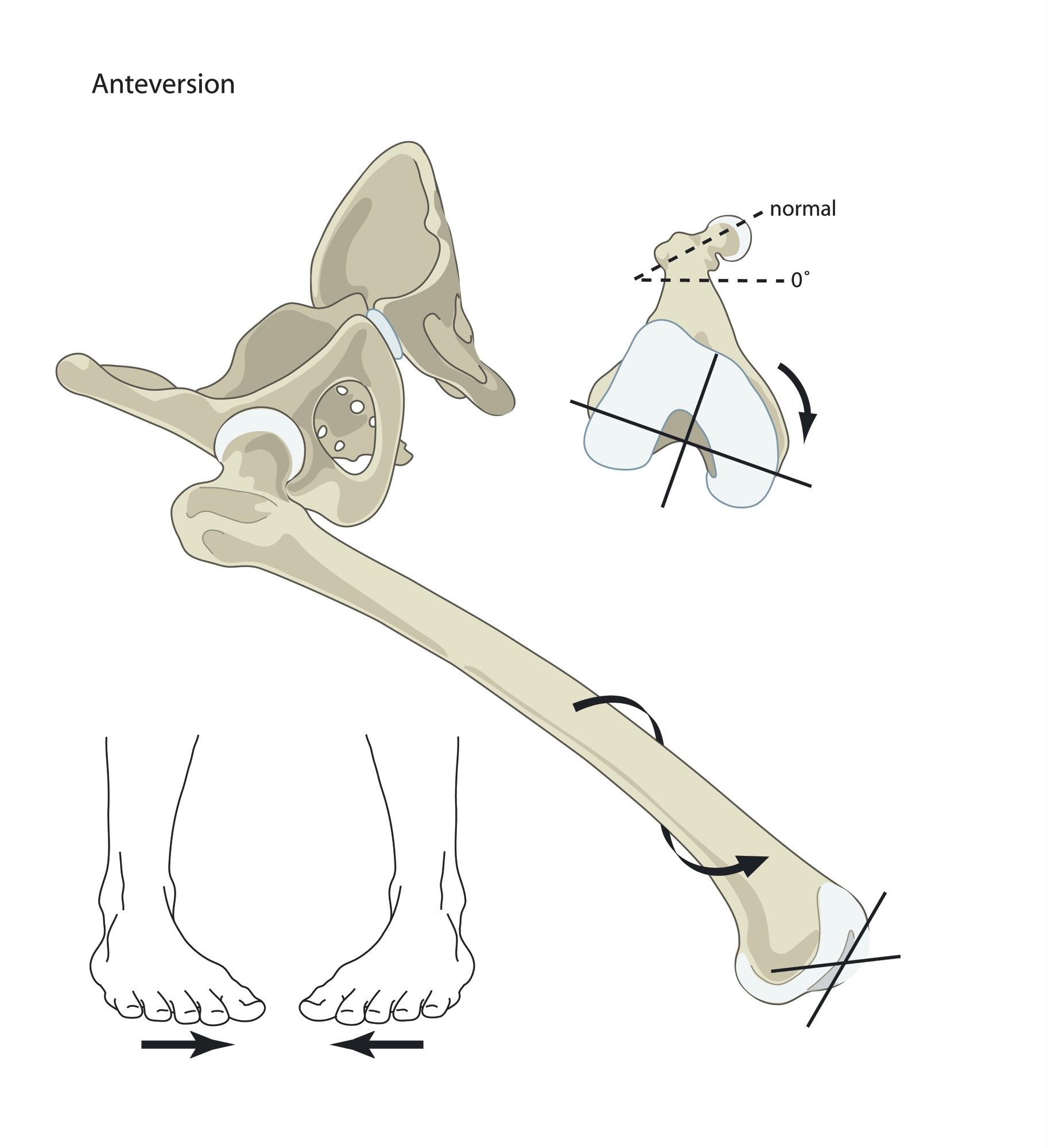
You’d expect retroversion to be an advantage. In practice, people with retroverted femurs often feel self-conscious about their feet, because they need to be turned out while walking. So they force their feet to point straight ahead, which recreates the same disadvantaged glute position by a different route — plus excess inner-thigh tension, locked knees, and more ankle sprains.
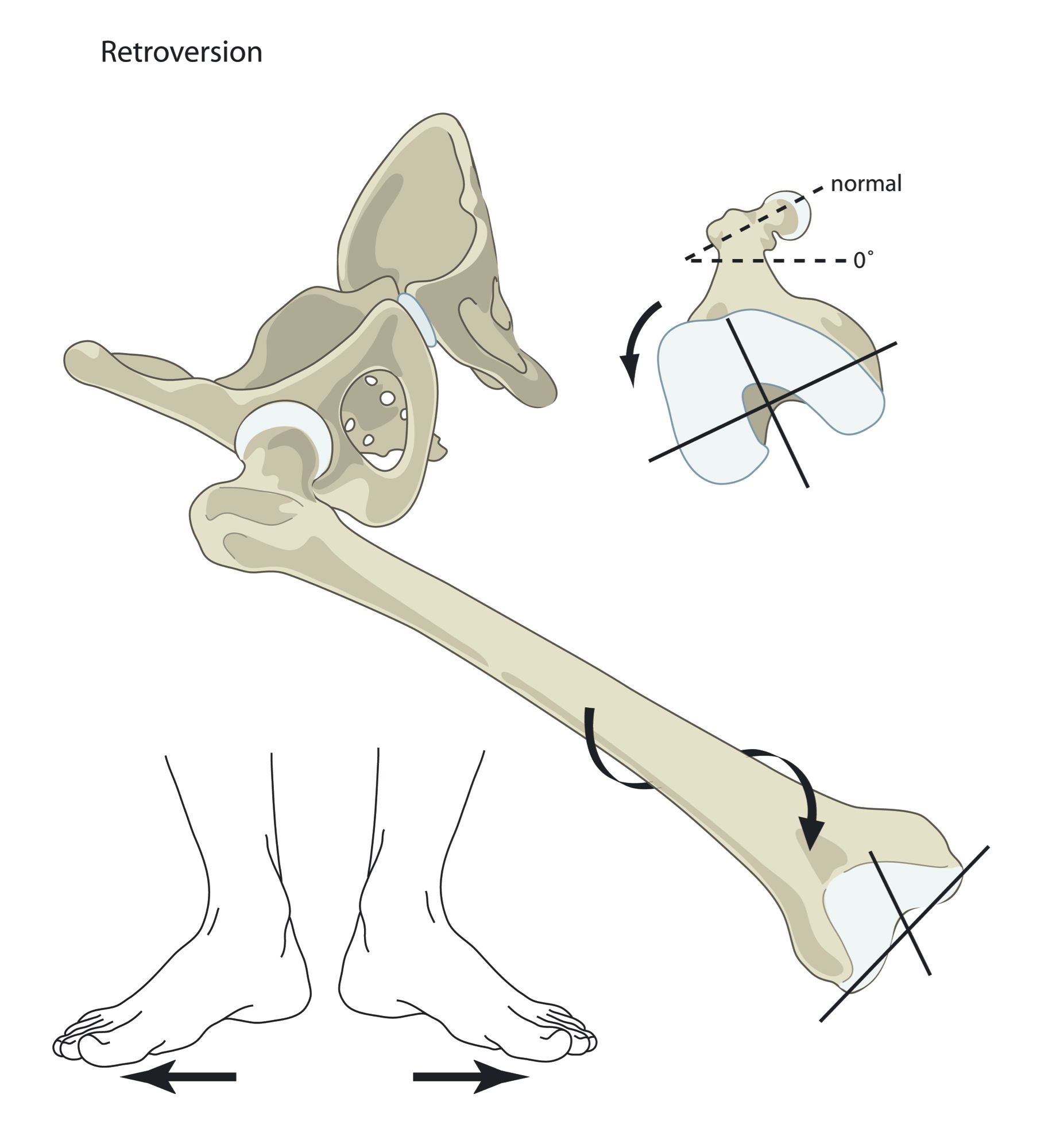
In my clinical experience working with people in chronic pain, anteversion is more common in women and retroversion in men. Female athletes face a two to eight times greater risk of ACL injury than male athletes. I believe poorly controlled femoral anteversion is part of why — though that specific mechanism is my clinical belief connecting the two facts, not something directly tested.
Cause 4: the thigh muscle nobody checks
Quick take: Tight quads pull your pelvis forward, often asymmetrically, which can create the sidebending problem all on its own — no walking habit or femoral shape required.
Watch: The muscle nobody checks for sciatica
The quadriceps begin at the front of the hip and insert into the knee. When tight, they can pull the pelvic bone forward into an anterior tilt. Asymmetrical tightness can then contribute to a sidebending problem, or torsion across the pelvis that also contributes to SI joint pain.
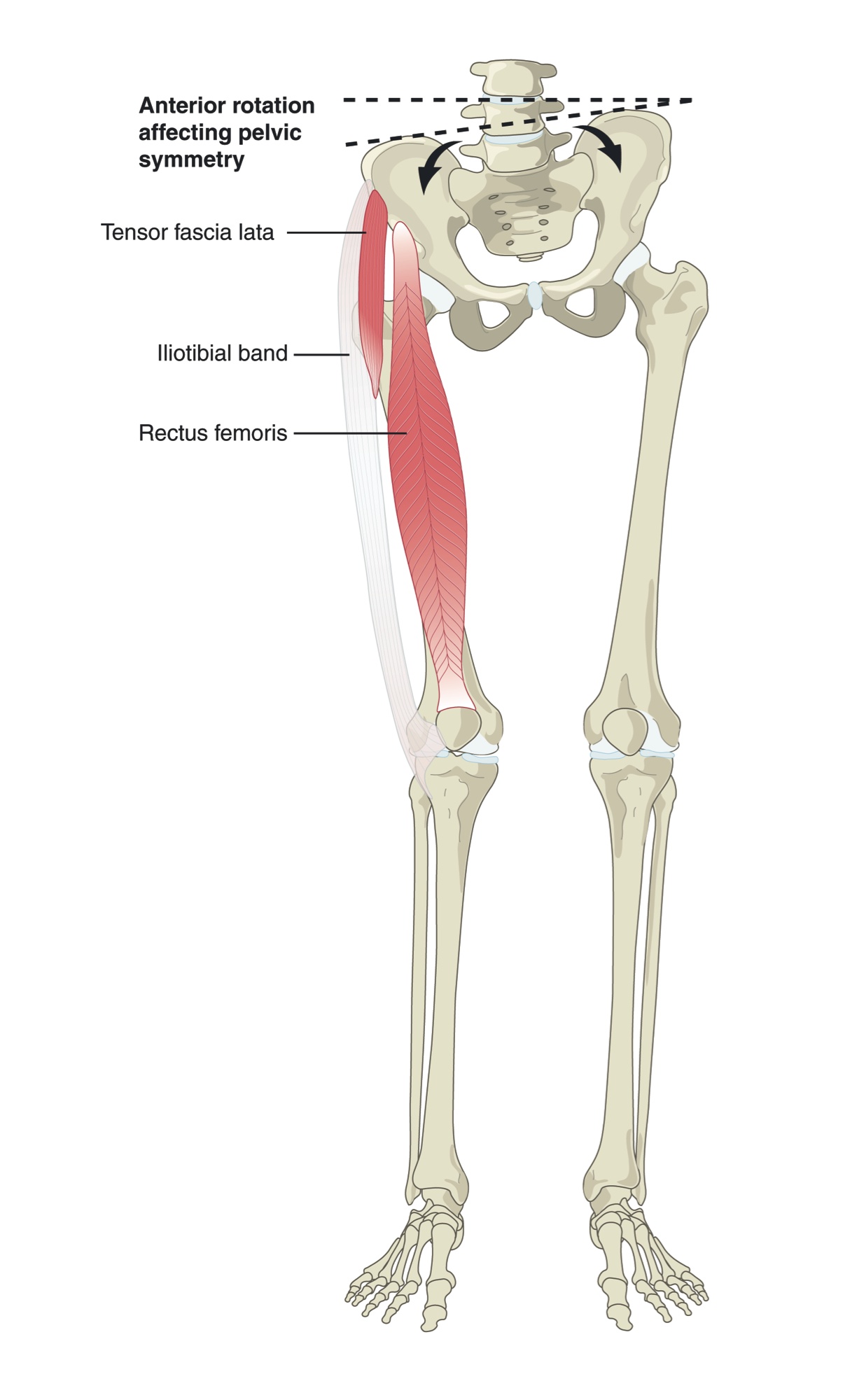
That tilt does three things: it extends the lumbar spine on that side, narrowing the nerve root space directly; it weakens the glute on that side; and it contributes to the uneven pelvis described above.
I’ve had patients whose sidebending problem, and sciatica, resolved quickly just from stretching this group of muscles.
Putting it all together
A walking habit rooted in an old injury, a disadvantaged thigh bone, or tight thigh muscles — any of these pulls your pelvis and rib cage out of level. That’s the sidebending problem you likely found in your own body if you took a photo in the test above. And it directly narrows your nerve root space, contributing to your sciatica.
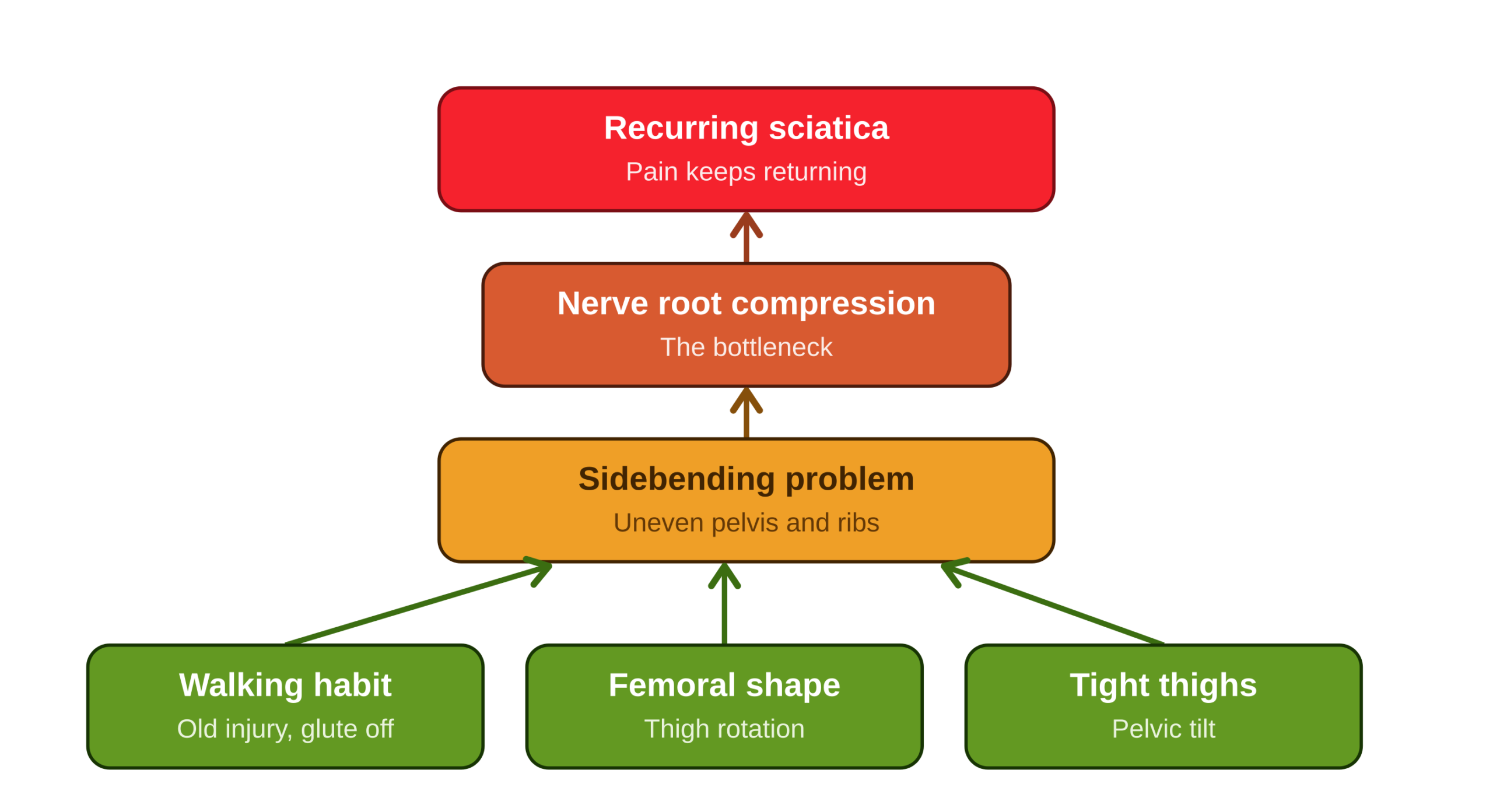
That’s why reaching while walking can bring fast relief: it levels the rib cage and pelvis, opening the space back up immediately. But fixing the crease without fixing what’s pulling you into it is exactly why so many people cycle through practitioner after practitioner without lasting results. Not only are most practitioners unaware of this pattern, they aren’t trained to link lower body issues to it.
I refer to my approach as systems thinking, because it relies on understanding how the body works together as a system — rather than how we’re trained in medicine, which is to treat each joint or tissue in isolation. I call that component thinking. I’ve spent my 30-year career putting this together into a logical system that works well clinically.
Rick’s takeaway
If treatment after treatment hasn’t worked permanently, the next step isn’t another treatment aimed at the same thing. It’s finding what’s been causing that same problem to return again and again, and fixing that instead.
Common questions
Why does my sciatica keep coming back?
Usually an uneven pelvis and rib cage narrowing your nerve root space, caused by something else — a walking habit, thigh bone shape, tight thighs, or old injuries that never got addressed properly.
Why did raising my arm while walking relieve my pain?
It lifts and lengthens the rib cage on your pain side, briefly correcting the sidebending problem. It also temporarily fixes the walking pattern that created the uneven pelvis and rib cage. Have someone measure with their hands to confirm.
Can an old injury that no longer hurts still cause my sciatica?
Yes. The protective walking pattern often outlasts the injury itself by years.
Why isn’t physical therapy or chiropractic fixing my sciatica?
Standard care is trained around the joint that hurts. If the driver is upstream — gait, glute activation, pelvis position — it can be delivered well and still miss it.
I was told to walk more to fix my pain. Can walking make sciatica worse?
Yes. Walking can be key to fixing these problems, but you have to walk correctly. Older problems in the legs manifest during walking, which is what creates the sidebending problem.
Can tight thigh muscles cause sciatica?
Yes, by tilting the pelvis forward, often on one side, which then affects the lateral compression in the spine.
Can you have sciatica with a normal MRI?
Yes. Imaging and pain don’t always correspond, which is why how you move matters alongside imaging, not instead of it.
Can you solve sciatica even with problems found on an MRI?
Yes. The way I think about it is that everything discussed in this article feeds the problems found on your MRI, making them painful.
If the reaching-while-walking test brought relief
Find what’s actually driving it
7 Days to a Better Back runs you through more testing and reasoning, then creates a prioritized plan to fix the drivers of your pain rather than the symptom.
Explore 7 Days to a Better Back
Want to read further first? Pain Patterns: Why You Are in Pain and How to Stop It explains the nuts and bolts of this systems-thinking approach, with a free assessment tool.
Have a question this article didn’t answer?
Send it through the Ask Rick form. I read every question and use the most common ones to shape future articles, videos, and my monthly email — sometimes by featuring them, never with identifying details, in a public answer. I ask for your email in case I need more detail, or want to let you know when I’ve covered it.