Back & sciatica · start here
The 60-second test that reveals why your back pain keeps coming back
Why core strengthening isn’t the fix, and what actually is.
Licensed orthopedic physical therapist, 30 years of clinical experience. Former clinic owner,
author of Pain Patterns, winner of the 2025 NIEA Award, and creator of a systems-based
approach to chronic pain used in his APTA-approved continuing education course.
If there were one or two exercises that fixed everyone’s back pain, they’d be plastered all over the internet by now, printed on handouts in every doctor’s and physical therapist’s office. They’re not.
Low back pain affected 619 million people worldwide in 2020, and that number is projected to climb to 843 million by 2050 as the population ages.1
It’s tempting to write that off as “well, people just get older.” But age by itself doesn’t cause back pain. Age is what gives the wrong movement patterns more time to compound. More years spent doing the wrong things, more accumulated strain on the same tissues. More years doing the right things, and that same time span works for you instead of against you.
Many of you reading this will say that you know exactly why you have low back pain — your MRI scan told you so. I especially hope, if this describes you, that you continue to read on, because there’s a great deal of evidence, both clinical and research, that doesn’t support that conclusion.7
So what’s actually going on with low back pain? After 30 years as an orthopedic physical therapist, here’s what I’ve found: almost all chronic back pain comes down to one or two things happening in your spine.
- Too much arching, or too little.
- An uneven pelvis and rib cage that’s driving the pain to one side.
You’ll learn how to test for both of these in this article.
Back pain can have serious causes that need medical evaluation. This article isn’t a diagnosis or a substitute for professional care.
Watch the video version
Two simple tests, about five minutes total, that tell you exactly which pattern is driving your back or sciatic pain.
The first cause: too much arch, or too little
The short version: if your back feels better with your knees bent, you may have an extension problem. If it feels better with your legs straight, you may have a flexion problem. If your pain is mainly one-sided, a sidebending problem may also be involved. Below, you’ll test yourself for each.
Let’s break down the first cause. For most people, chronic back pain traces to one of two patterns.
An extension problem means your low back is too arched, or too many forces are pulling it into an arch. This is by far the more common pattern in chronic back pain.
A flexion problem means your low back is too flat and wants more arch. This one is rare in chronic cases, but common in acute disc-related back pain. Interestingly, most generic solutions for back pain that you see on the internet and in clinics fall into this category — bird dog, cobra pose, upward dog, and so on.
So first, let’s find out which camp you fall into. Below is the simple test that answers that question.
The 60-second test: extension or flexion?
Try this test
Extension or flexion?
- Lie on your back on a firm surface, like the floor, with your legs straight. Stay there for 30 seconds and note your back’s discomfort.
- Bend both knees, feet flat on the floor. Stay there for 30 seconds. If you don’t notice a difference in your back pain, hug both knees to your chest instead and hold there.
- Compare: which position felt better for your back pain?
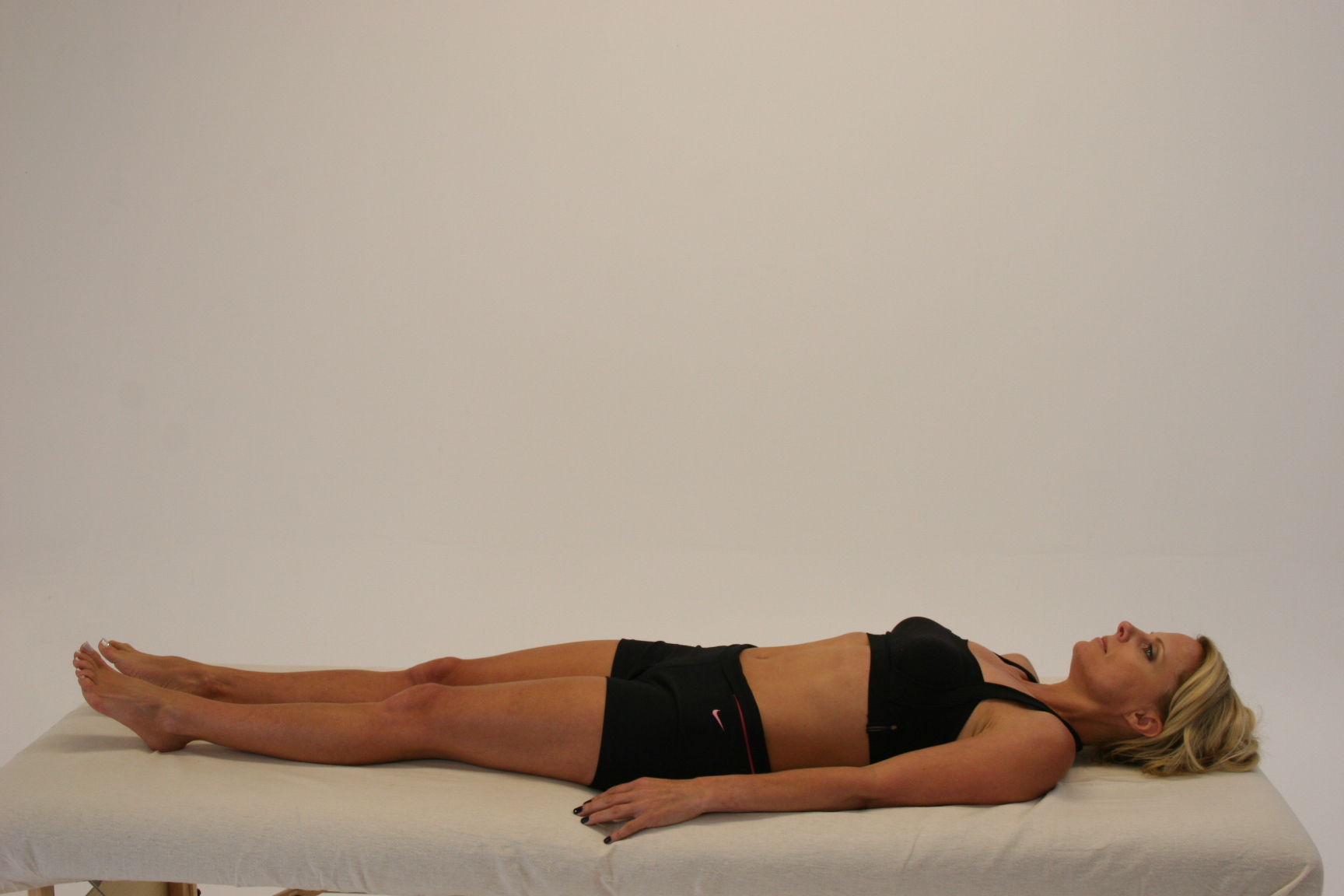
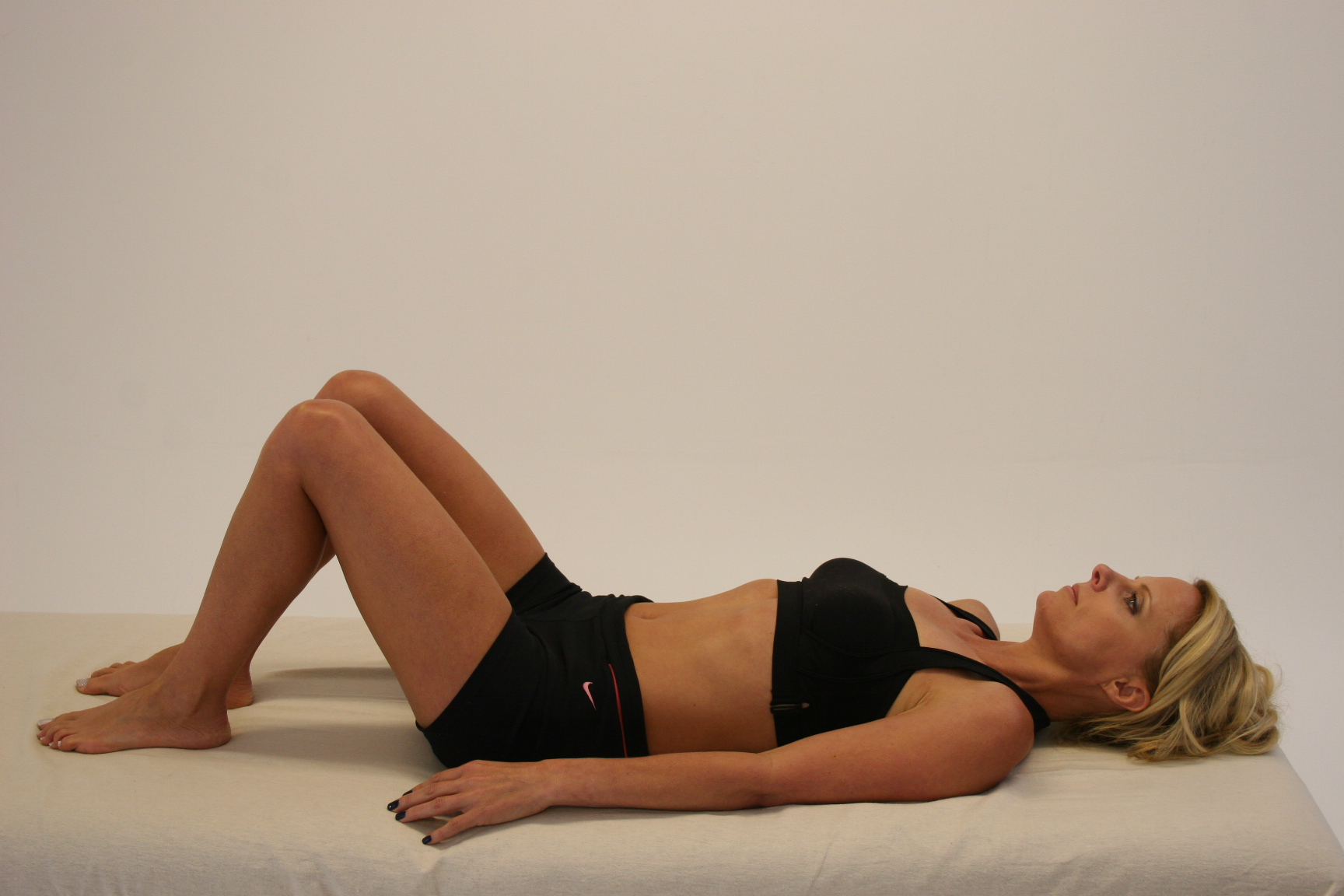
If your back felt better with legs bent, you likely have an extension problem. In my clinical experience, this fits about 99% of the people I’ve seen for low back pain. That means you have too much arch, or too many forces trying to arch your back further. The degree matters too: if a small knee bend was enough to reduce your pain, the forces pulling your back into extension are relatively mild. If you needed your knees all the way to your chest to feel relief, you have larger forces acting on your spine.
Conversely, if your back felt better with legs straight, you likely have a flexion problem. In my experience this is rare with chronic back pain — I see perhaps one case a year — but it’s a very common pattern in acute, disc-related pain (more on that distinction below).
A note on false answers. Many people assume they should feel better with their legs straight, so they talk themselves into that answer instead of feeling what’s actually true. Take the full 60 seconds and pay attention to your body, not your assumption.
Why this works as a diagnostic. In the minute it takes to do this test, nothing about the structural findings on your MRI has changed. No disc bulge or herniation has suddenly disappeared, no joint has healed, no muscle or ligament has been repaired. What changed is the force acting on your spine. If your pain changes that fast, the mechanics loading your spine matter as much as — or more than — whatever a scan found.2
Watch: Back pain from an L4-5 disc bulge? — a bonus segment from Bob & Brad, applying this test to a real MRI report, live.
The second cause: a sidebending problem
If your pain is mainly one-sided, an uneven pelvis and rib cage — what I call a sidebending problem — is often involved too.
Try this test
Is your pelvis uneven?
- Take your shirt off and stand naturally — don’t correct your posture.
- Have someone photograph your back, from the base of your buttocks up to your shoulders.
- Look for a crease at your waist that’s larger on one side.
- That’s usually the same side as your pain, with the pelvis higher and the rib cage lower on that side.
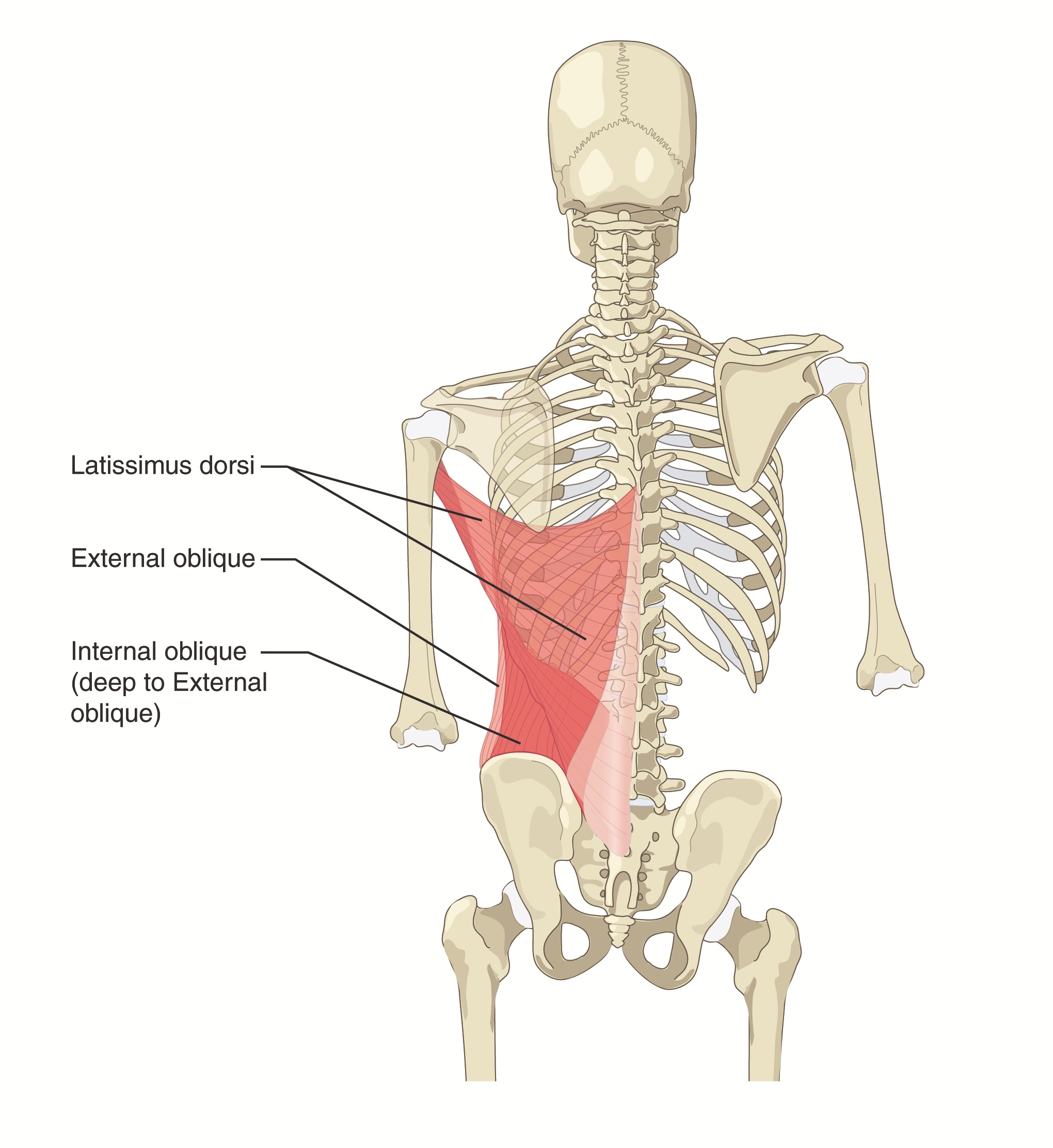
I go into this pattern in full depth — including the photo test, the quick “reaching while walking” fix, and why it’s so often misdiagnosed as a leg length discrepancy — in my sciatica article, since it’s the primary driver behind most one-sided sciatic pain. Everything there applies just as much to one-sided back pain.
Why isn’t this just “core strength”?
Watch: Is core strength critical for chronic back pain?
At the risk of creating an uproar on the internet: a stronger core doesn’t fix either of these problems. If a stronger core were the answer, you’d never see anyone with a six-pack in back pain. But plenty of people with visibly strong abs have chronic back, sciatic, or SI joint pain, and plenty of people who can’t do a single sit-up don’t. Abdominal or core strength isn’t the variable that’s failing.
What the research backs, and what it doesn’t
The whole idea of “core stability” traces to a single, much narrower finding: two deep muscles — the transversus abdominis and multifidus — activate slightly slower in people with low back pain. Not weaker. Slower.3 That’s a timing problem, not a strength problem, and timing and strength call for very different fixes. But be clear that this doesn’t necessarily mean the slower firing pattern is causing back pain. It could just as easily mean the back pain is causing the muscles to fire more slowly — pain commonly inhibits muscle function.
Even researchers can’t agree on what “core” means. Definitions in the literature range from “the abdominal and lumbopelvic region” to “the neuromuscular system’s ability to control and protect the spine.”4 If the field can’t agree on the target, it’s no surprise the outcomes are inconsistent.
A Cochrane review — the highest standard of evidence synthesis in medicine — found core-specific exercise is not superior to general exercise for chronic low back pain.5 Both beat doing nothing. Neither beats the other.
What I’ve also noticed is that most of these trials don’t isolate the muscles they claim to test. Their own descriptions show programs progressing to more complex and functional tasks that integrate deep and global trunk muscles along with everything else — meaning the intervention broadens into general movement almost immediately. That makes it hard to credit any improvement specifically to “the core” rather than to the general movement retraining riding along with it.
One exception: acute, disc-related back pain. When a disc is freshly irritated, inflamed, or bulging, some spinal stabilization can help by reducing motion at the injured level.6 As that acute episode resolves, core work becomes less and less relevant — and for the chronic pain most people are searching for answers about, it was never the primary lever to begin with.
Here’s how I think about it. Our bodies have multiple lever arms acting on the low back: tight thigh muscles, a locked-knee walking habit, an old injury you’ve been unconsciously compensating around for years, pelvic dysfunction. All of it comes from the lower body operating on the pelvis and, consequently, the low back. The core sits at the junction of those lever arms.
Focusing on the core to solve spinal pain is like trying to move a big rock with your hands instead of using a lever to pry it up. The levers — the lower body biomechanics feeding stress into your spine — have far more impact on the spine.
Fixing an extension problem
Watch: Hidden posture habits causing your back pain
Someone with an extension problem needs to reduce the degree of arching in their lower spine. Here are a couple of ways to do that.
Unlock your knees
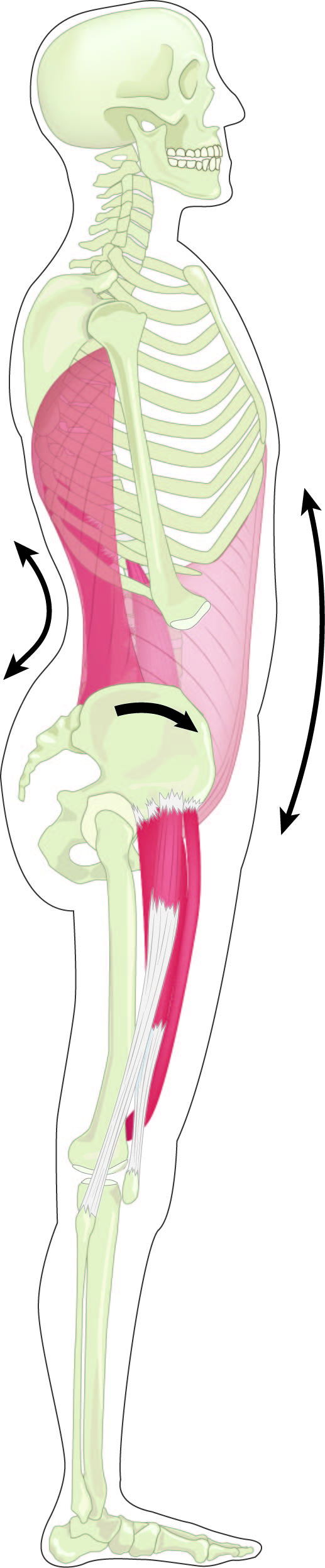
Stand for three minutes and you’ll notice you start locking one or both knees backward within about a minute. It conserves energy by resting on the joint instead of the muscle. Locking the knee also tilts the pelvis forward, which increases the arch in your low back — exactly what you don’t want if an extension problem is feeding your low back pain.
The fix: simply unlock your knees, just slightly, when standing or walking. Because this is a subconscious habit, a small piece of tape on the back of each knee works as a physical reminder every time you lock them. In my clinical experience, most people notice reduced pain within 24 hours and have the habit changed within three to five days of consistent attention.
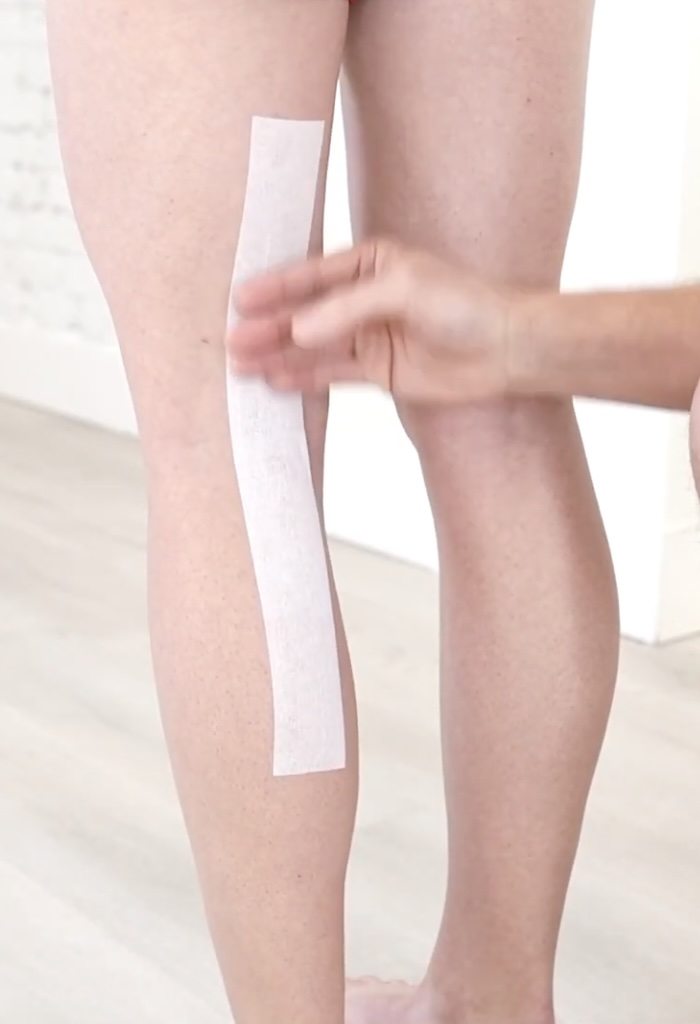
This is the same locked-knee habit that shuts off your glutes and drives hip pain. I cover the fuller mechanism and a more active fix — tiptoe walking — in my hip pain series.
A woman I worked with had back pain that had confounded providers for 35 years. It actually caused her to lose her sports scholarship in college. Her extension problem traced primarily to locked knees combined with tight thigh muscles. Within two weeks her pain was reduced by 80%, and it eventually resolved fully once we addressed the rest of what was feeding the pattern.
— Rick’s case notes
Relax the “perfect posture” habit
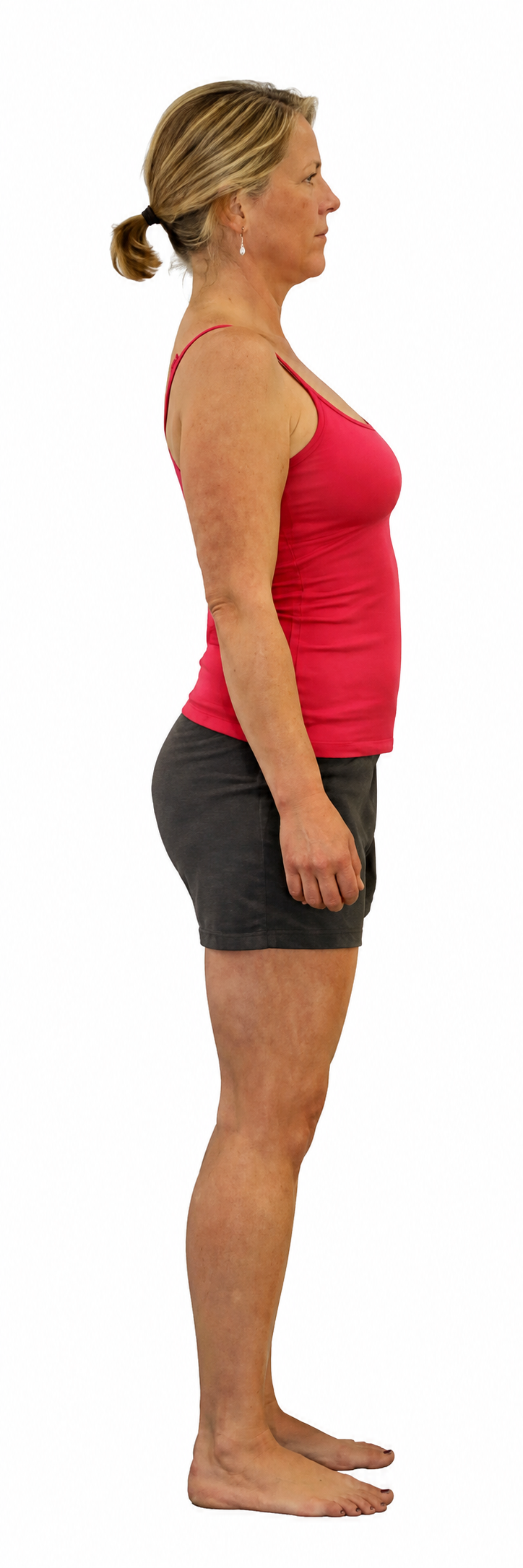
Locking the knees is often part of a larger postural pattern, where people believe the more erect you are, the better your posture is. That pattern strongly contributes to an extension problem. See for yourself: stand as tall and erect as you can, and you’ll notice your knees lock to achieve it. You’ll also notice your low back muscles contracting significantly. So start relaxing your posture while unlocking your knees a little.
Fixing a flexion problem
Back pain from a flexion problem needs more arching in the lower spine, not less. This is where those exercises I mentioned earlier come in — the bird dog, the cobra, upward dog. They promote more arching. But I’ve found a general lack of postural effort in people with flexion problems. Essentially, they need to become more erect in their posture. I’ve developed a simple method for achieving this, called lifting the rib cage.
Try this
Lifting the rib cage
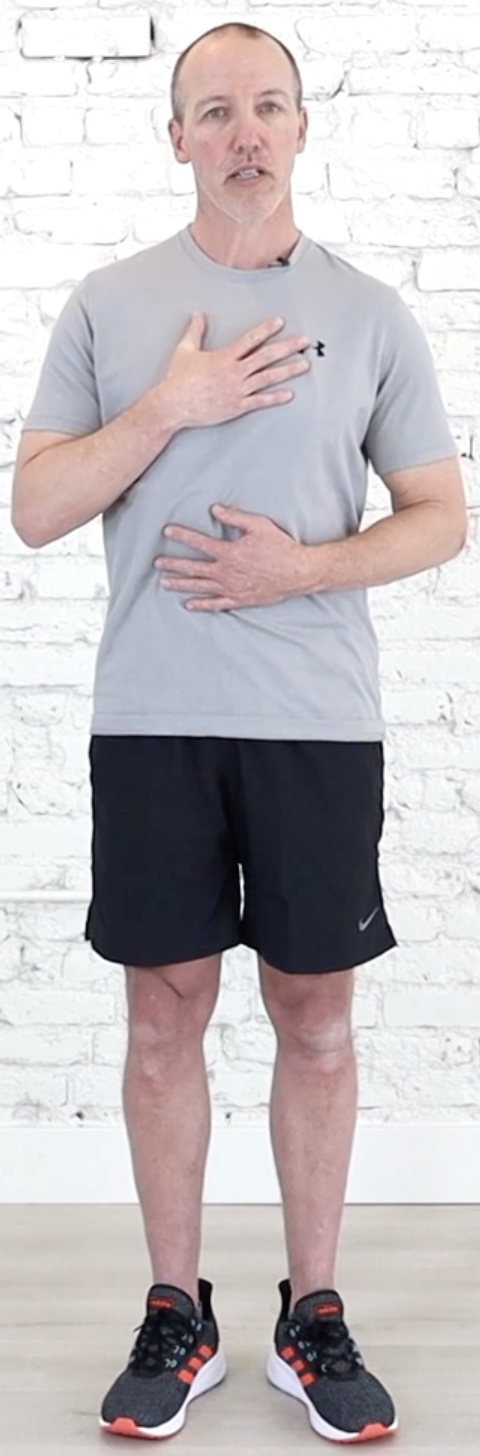
- Stand with one hand on your chest and one on your belly.
- Inhale and let your rib cage rise.
- Exhale and let it lower — but not all the way. Hold it slightly higher than your resting position, perhaps a centimeter.
- You’ll feel your stomach muscles gently engage to support that. That’s your core holding up your upper body system, which is what it’s designed to do.
- Keep your shoulders relaxed rather than using them to assist with the posture.
Shoulders aren’t designed to create posture — using them this way can set up other problems in the upper body system.
A patient of mine had on-and-off back pain for seven years, mostly caused by poor posture and a flexion problem. Once he started practicing this rib cage lift consistently — cued by moving his watch to the opposite wrist as a reminder — his pain dropped significantly within a week and fully resolved within about three weeks.
— Rick’s case notes
The acute disc exception
It’s possible to have both patterns at different times. A chronic extension problem can be temporarily overridden by an acute disc episode, which behaves like a flexion problem while it’s inflamed. During that acute phase, lying on your stomach with a pillow under your chest, or doing the cobra or bird dog — all of which encourage more arch — can ease disc-related pain, even though that same position would aggravate a typical chronic extension problem. As the acute episode calms down over days to a week, the amount of extension needed decreases, and you’re usually left with your underlying extension problem to address.
Putting it all together
One of my patients, a very active man in his late 50s, had right-sided back pain for over 20 years, including a disc surgery and multiple cortisone shots that never solved it. His exam showed an extension problem, a right sidebending problem, poor gluteal activation while walking, tighter thigh muscles on the right, and retroverted femurs — five separate contributors stacked on top of each other. The gluteal and femoral shape pieces are patterns worth understanding on their own; I cover them in full in my hip pain series.
Unlocking his knees, reaching while walking, and stretching his thighs brought 75% relief in the first week alone. The remaining piece turned out to be tension patterns held throughout his body, so he used my somatics lessons to resolve the rest.
That’s usually how it goes: several of these patterns compounding at once, not one isolated cause. The body doesn’t lie about what’s actually happening, even when a diagnosis, a scan, or years of treatment pointed somewhere else. Fix the components of the pattern, and in my clinical experience the pain usually follows fairly quickly — no matter how long it’s been there, or what your imaging shows.
Rick’s takeaway
Before you strengthen anything, find out which direction your spine is stuck in. Too much arch, too little, or sidebending — the fix runs the opposite way for each one, which is why a single set of back exercises can’t work for everyone.
Common questions
Why does my back pain keep coming back?
Most chronic back pain traces to too much or too little arch in your low back, often combined with an uneven pelvis and rib cage. Treatments aimed at the spine directly often don’t hold, because they don’t address what’s causing the larger pattern.
Is core strengthening bad for back pain?
Not bad — just not the primary fix for most chronic cases, in my experience. Research shows core-specific exercise isn’t superior to general exercise, and even researchers can’t agree on a consistent definition of “core.” It has value once your pain is resolved. It’s just rarely what resolves it.
How do I know if I have an extension or flexion problem?
Do the 60-second test above. It’s fast and easy.
Can tight thigh muscles cause back pain?
Yes. Tight quadriceps pull the pelvis forward, increasing the arch in your low back and feeding an extension problem.
What should I do if I can barely walk from back pain?
Assuming you’ve been cleared by your physician, this question points to walking as a stressor to your back, as opposed to sitting. If that’s true — more pain standing or walking than sitting — it points to an extension problem, because your back is simply more arched when you stand and less arched when you sit. You can confirm this with the test above, then read the rest of the article to learn more about what contributes to an extension problem.
Can I have a disc bulge or stenosis on my MRI and still fix my pain this way?
Yes. In a review of over 3,000 completely pain-free people, disc degeneration showed up on imaging in 37% of 20-year-olds and 96% of 80-year-olds; disc bulges in 30% and 84%.7 These are people who never had back pain. A structural finding on your scan tells you something is present — it doesn’t tell you it’s the cause. What matters more is the stress currently loading that structure, which is exactly what these tests and fixes address.
If your test pointed to an extension, flexion, or sidebending problem
Work through the whole correction at home, in seven days
7 Days to a Better Back takes you from that finding through the full correction process, step by step, instead of guessing at which exercise to try next.
Explore 7 Days to a Better Back
Prefer the bigger picture first? Pain Patterns: Why You Are in Pain and How to Stop It walks through this whole systems-thinking approach, with a free assessment tool that builds your own corrective plan.
Some links in this article are affiliate links. If you buy through them I may earn a small commission, at no extra cost to you. I only recommend products I actually use with patients.
Have a question this article didn’t answer?
Send it through the Ask Rick form. I read every question and use the most common ones to shape future articles, videos, and my monthly email — sometimes by featuring them, never with identifying details, in a public answer. I ask for your email in case I need more detail, or want to let you know when I’ve covered it.
References
- GBD 2021 Low Back Pain Collaborators. “Global, regional, and national burden of low back pain, 1990–2020, its attributable risk factors, and projections to 2050: a systematic analysis of the Global Burden of Disease Study 2021.” Lancet Rheumatol. 2023;5(6):e316–e329. Low back pain affected 619 million people globally in 2020; projected to reach 843 million by 2050, a 36.4% increase. ↩
- Nachemson A. “The effect of forward leaning on lumbar intradiscal pressure.” Acta Orthop Scand. 1965;35:314–328; Wilke HJ, Neef P, Caimi M, Hoogland T, Claes LE. “New in vivo measurements of pressures in the intervertebral disc in daily life.” Spine. 1999;24(8):755–762. Foundational and modern confirmation that spinal position directly changes the load and pressure on spinal tissues. ↩
- Hodges PW. “Core stability exercise in chronic low back pain.” Orthop Clin North Am. 2003;34(2):245–254. Describes the deep-muscle timing deficit (transversus abdominis, multifidus) that gave rise to “core stability” as a clinical concept. ↩
- Multiple competing definitions of “core stability” are documented across the rehabilitation literature, including Bergmark and Panjabi’s foundational biomechanical model (Panjabi MM. “The stabilizing system of the spine. Part II. Neutral zone and instability hypothesis.” J Spinal Disord. 1992;5(4):390–396) through later, inconsistent clinical and anatomical definitions. ↩
- Saragiotto BT, Maher CG, Yamato TP, Costa LOP, Menezes Costa LC, Ostelo RWJG, Macedo LG. “Motor control exercise for chronic non-specific low-back pain.” Cochrane Database Syst Rev. 2016;2016(1):CD012004. Found low to moderate quality evidence that core-focused motor control exercise is not superior to other forms of general exercise for chronic low back pain. ↩
- Clinical distinction between acute, disc-related back pain (where temporary stabilization work may help while the disc settles) and chronic back pain patterns (where biomechanical drivers are the primary target), per Rick Olderman’s clinical framework in Pain Patterns: Why You Are in Pain and How to Stop It (Boone Publishing, 2024). ↩
- Brinjikji W, Luetmer PH, Comstock B, Bresnahan BW, Chen LE, Deyo RA, Halabi S, Turner JA, Avins AL, James K, Wald JT, Kallmes DF, Jarvik JG. “Systematic literature review of imaging features of spinal degeneration in asymptomatic populations.” AJNR Am J Neuroradiol. 2015;36(4):811–816. Review of 33 studies, 3,110 asymptomatic (pain-free) individuals. Disc degeneration prevalence rose from 37% at age 20 to 96% at age 80; disc bulge prevalence rose from 30% to 84% over the same range. ↩ ↩